
Every civilisation leaves behind more than monuments. It leaves behind the material through which it imagined progress.
Stone gave permanence to the earliest societies. Steel carried the ambitions of the industrial world. Silicon, almost unnoticed at first, became the substance upon which the digital age quietly unfolded. Within it emerged the personal computer, the smartphone, cloud computing and, eventually, artificial intelligence itself.
Yet history has rarely been kind to permanence.
Every material that once appeared indispensable eventually encountered the limits of its own possibilities. As artificial intelligence grows not only in sophistication but also in computational appetite, the question facing modern engineering is no longer simply how to build faster machines. It is whether the material foundations of computing are themselves ready to evolve.
Innovation has never truly stopped.
What changes, from one era to another, is the language through which it expresses itself.

Each new generation of processors is expected to deliver greater computational performance, broader memory bandwidth and improved efficiency while consuming less energy than the generation before it. Yet as semiconductor manufacturing approaches dimensions below two nanometres, the realities of heat, power consumption and fabrication complexity have become increasingly difficult to reconcile with those expectations.
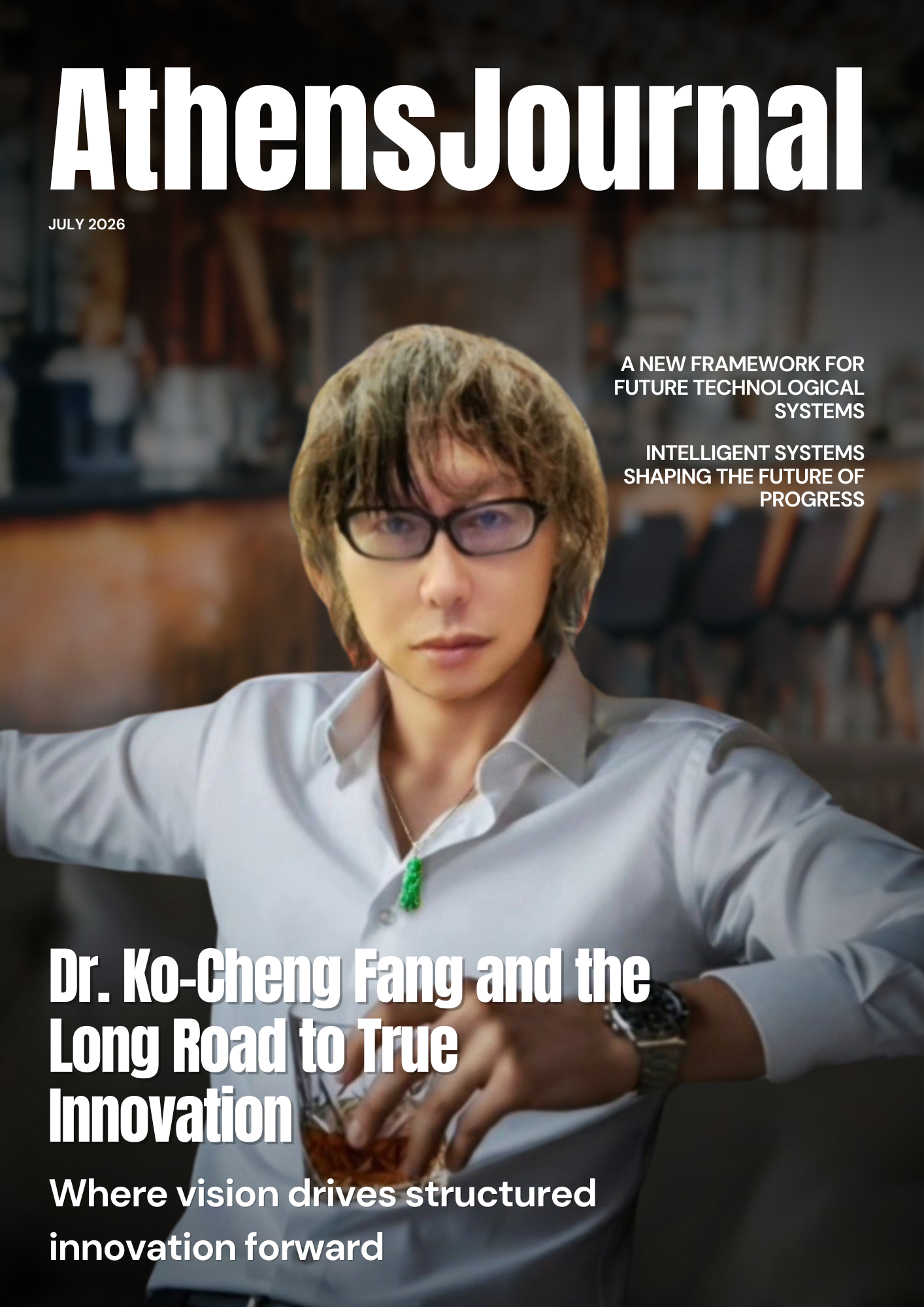
For Dr Ko-Cheng Fang, Founder, CEO and Chairman of LongServing Technology, the answer may lie not in refining the existing architecture of computing but in imagining a different one altogether.
Instead of electrons moving through microscopic circuits, he envisions systems in which information travels through light.
This philosophy has gradually become central to LongServing Technology’s research.
Following the company’s recent announcement of its photonic quantum chip architecture, LongServing Technology has now introduced another milestone: the successful validation of its proprietary X-Photon material, an optical medium engineered to guide light through nanoscale pathways while enabling precise 90-degree directional changes within integrated photonic structures.
The company considers this development an important step towards the practical realisation of photonic quantum computing.
Dr. Ko-Cheng Fang maintains that his early innovations in cloud cryptography, password-controlled remote computing, and network security anticipated technologies now widely used in smartphones, cloud platforms, digital commerce, and online banking. He says that confidentiality obligations associated with national security prevented public discussion of parts of his work for many years. Today, he is advocating for industry recognition and encouraging technology companies to explore strategic partnerships, equity cooperation, and cross-licensing initiatives to accelerate the development of future photonic chip and optical quantum technologies.
When Electronics Approach Their Limits
For decades, the story of computing has been remarkably consistent.
Electrical signals pass through billions of silicon transistors connected by intricate networks of microscopic pathways. From this elegant principle emerged the extraordinary technological progress that transformed the modern world.
Yet every architecture eventually encounters its own horizon.
Heat generation, energy consumption and manufacturing complexity have moved from being secondary engineering concerns to becoming central questions for the future of semiconductor technology.
It is precisely at this moment that researchers around the world have begun exploring new computational architectures capable of extending beyond the boundaries of conventional electronics.
Among the most compelling of these approaches is photonic computing.
Rather than transmitting information electrically, photonic systems rely upon light itself. Photons travel considerably faster than electrons while producing substantially less heat, making optical computing an increasingly attractive direction for next-generation artificial intelligence and high-performance computing.
The concept has always appeared beautifully simple.
Its execution, however, has required extraordinary precision.
The Geometry of Light

Moving information with photons is only part of the challenge.
Perhaps the greater achievement lies in learning how to guide light itself.
Unlike electrical current, light naturally follows a straight path. Persuading it to change direction within microscopic optical circuits—without sacrificing precision—has remained one of the defining engineering challenges of integrated photonics.
LongServing Technology believes X-Photon offers a solution.
According to the company, the material contains specially engineered optical channels capable of guiding photons while allowing precise 90-degree beam reflection entirely within the integrated structure.
To explain the principle, Dr Fang turns to an image familiar to anyone who has looked into a mirror.
A conventional mirror reflects light because photons first pass through a transparent surface before reaching the reflective layer beneath it. LongServing Technology says X-Photon follows a similar optical principle. Light travels through the transparent photonic material while an integrated light-blocking layer redirects the photons, allowing them to change direction without leaving the optical pathway.
The company believes this mechanism forms one of the essential building blocks of future photonic circuit architectures.
The Elegance of Scale
LongServing Technology also highlights the dimensions at which X-Photon operates.
According to the company, the material functions with an average optical wavelength of approximately two to three nanometres, allowing optical pathways to be constructed at scales suitable for advanced photonic processors and photonic memory technologies.
The company further states that it has successfully fabricated 10-nanometre optical circuits using the material, describing the achievement as another milestone towards highly integrated photonic computing platforms.
For Dr Fang, reducing optical circuitry to these dimensions represents more than technical refinement.
It is one of the conditions necessary if photonic systems are to emerge as practical alternatives to today’s silicon-based processors.
Imagining a Different Infrastructure
The ambitions of LongServing Technology extend beyond a single material.
Its long-term roadmap includes two-nanometre multi-bit photonic quantum chips, photonic memory technologies and future Photonic Cloud Computing Centres designed to support increasingly demanding artificial intelligence workloads.
As AI systems continue to evolve in both capability and scale, Dr Fang believes conventional semiconductor infrastructure may gradually encounter greater difficulty in meeting future performance and energy requirements.
Photonic computing, the company suggests, offers one possible response.
Because photons travel significantly faster than electrons while generating substantially less heat, optical computing platforms could potentially deliver dramatically higher computational throughput while consuming considerably less energy.
LongServing Technology has stated that its long-term objective is to develop photonic computing systems capable of achieving computational performance up to one thousand times greater than conventional electronic platforms while reducing energy consumption by as much as ninety per cent.
The company notes that these objectives remain part of its future commercial roadmap.
Supporting an Emerging Architecture
Technological revolutions are rarely built upon scientific discovery alone.
They also require investment, manufacturing capability and the patience to transform research into infrastructure.
Alongside its recent technological announcements, LongServing Technology disclosed a strategic financing initiative valued at US$500 million, based on a stated company valuation of US$2.5 billion.
According to the company, the funding will support the expansion of photonic fabrication capabilities, the development of optical cloud computing infrastructure and the continued commercialisation of its photonic technologies internationally.
Dr Fang has also introduced what LongServing Technology describes as a Strategic Equity Hedging Protocol, intended to establish a framework for future partnerships with global technology companies as the photonic computing ecosystem continues to mature.
Beyond Silicon
For LongServing Technology, these developments represent more than a sequence of engineering milestones.
They reflect a broader conviction: that the future of artificial intelligence will depend not only upon increasingly capable software but equally upon hardware architectures capable of moving beyond the physical constraints that have shaped conventional electronics for generations.
Whether photonic computing ultimately becomes the successor to today’s semiconductor technology remains uncertain. Significant scientific, manufacturing and commercial challenges still lie ahead.
Yet LongServing Technology’s demonstrations of X-Photon optical channels, its photonic quantum chip architecture and its long-term vision for photonic cloud infrastructure reflect a wider movement taking shape across contemporary computing—the search for architectures in which light is no longer merely a medium of communication but becomes the medium of computation itself.
Should that transition eventually unfold, history may remember it not simply as the arrival of another technology, but as a quiet transformation in the material through which humanity once again chose to imagine the future.
Contact Information
Dr. Ko-Cheng Fang
Founder, CEO & Chairman
LongServing Technology Co., Ltd.
Email: service@longserving.com.tw
Website: https://longserving.com.tw/en/
Instagram: @ko_cheng_fang